How State-Specific Deposit Rules Shape Access to Multi-Game Tournaments in Licensed Mobile Platforms
Vera Ludwig · Oct 1, 2026
How State-Specific Deposit Rules Shape Access to Multi-Game Tournaments in Licensed Mobile Platforms
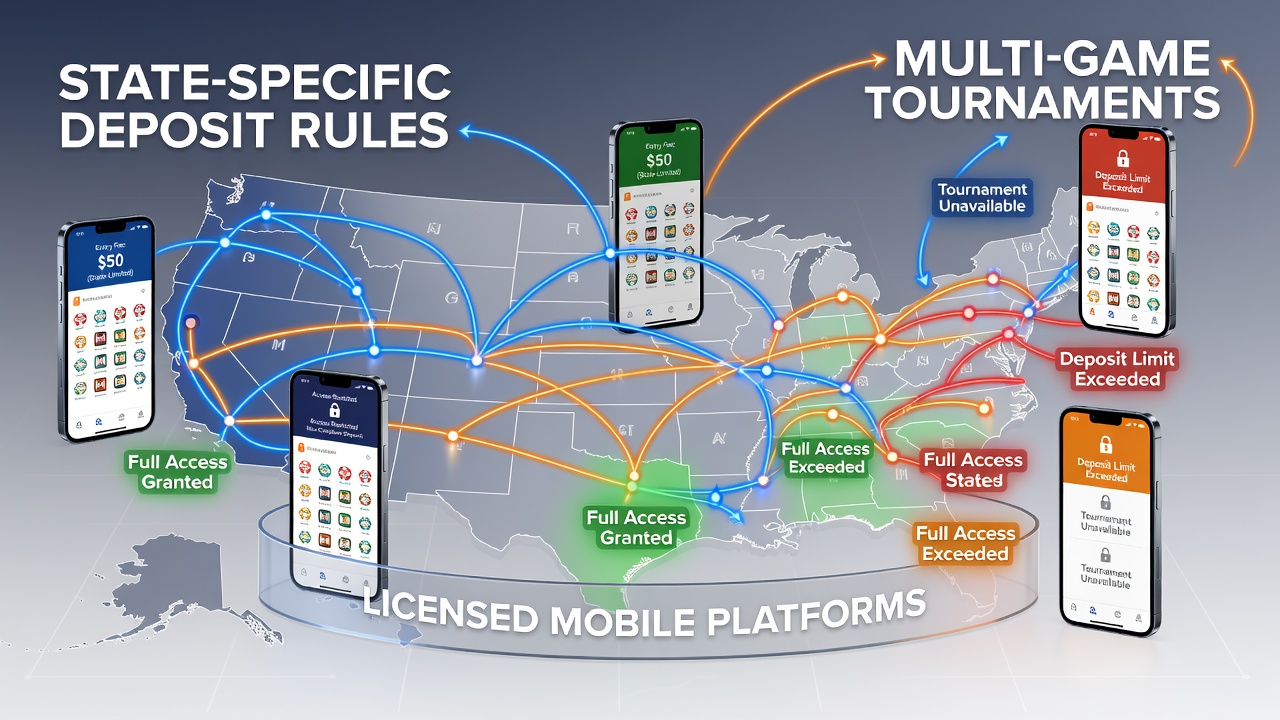
State regulatory frameworks establish distinct deposit thresholds and verification protocols that directly determine which players qualify for multi-game tournaments on licensed mobile platforms, and these variations create measurable differences in participation across jurisdictions. Data from regulatory filings shows that deposit minimums range from $10 in some markets to $50 or higher in others, while daily or weekly caps further restrict the frequency of entries into events that combine slots, table games, and live dealer formats.
Deposit Regulations Vary by Jurisdiction
Each state sets its own parameters for initial deposits, recurring limits, and identity checks, and these rules intersect with tournament structures that require players to meet cumulative deposit or wagering milestones within defined windows. In New Jersey, for instance, platforms must enforce a $20 minimum deposit for most accounts while additional layers of source-of-funds verification apply after certain thresholds, according to records from the New Jersey Division of Gaming Enforcement. Michigan applies similar verification steps but ties them to a $25 floor, creating slight but consistent differences in how quickly players reach tournament entry requirements.
Platform operators adjust their mobile applications to display state-specific deposit options at registration, and users in stricter markets encounter fewer payment methods or longer approval times before they can join cross-game events. These adaptations ensure compliance yet introduce friction that affects the pool of eligible participants for tournaments spanning multiple game types.
Eligibility Pathways and Tournament Structures
Multi-game tournaments typically demand a qualifying deposit or series of deposits within a set period, and state rules influence whether players can complete those steps in time. When a state imposes a $50 weekly deposit cap, participants face tighter constraints on accumulating the required balance compared with markets that allow $100 or more, and operators must program eligibility checks that reference the user's registered address and state license data.
Research from the American Gaming Association indicates that platforms serving multiple states maintain separate tournament brackets or entry tiers calibrated to local deposit ceilings, which prevents players from one jurisdiction from competing directly against those from another with looser limits. This segmentation preserves fairness while reflecting the underlying regulatory patchwork.
Platform-Level Responses to Regulatory Differences
Licensed mobile operators integrate geolocation and account-level deposit tracking to enforce state rules in real time, and these systems automatically filter tournament invitations based on a player's verified location and deposit history. In October 2026 several platforms rolled out updated compliance modules that cross-reference state deposit histories with tournament qualification logs, reducing manual reviews while maintaining audit trails for regulators.
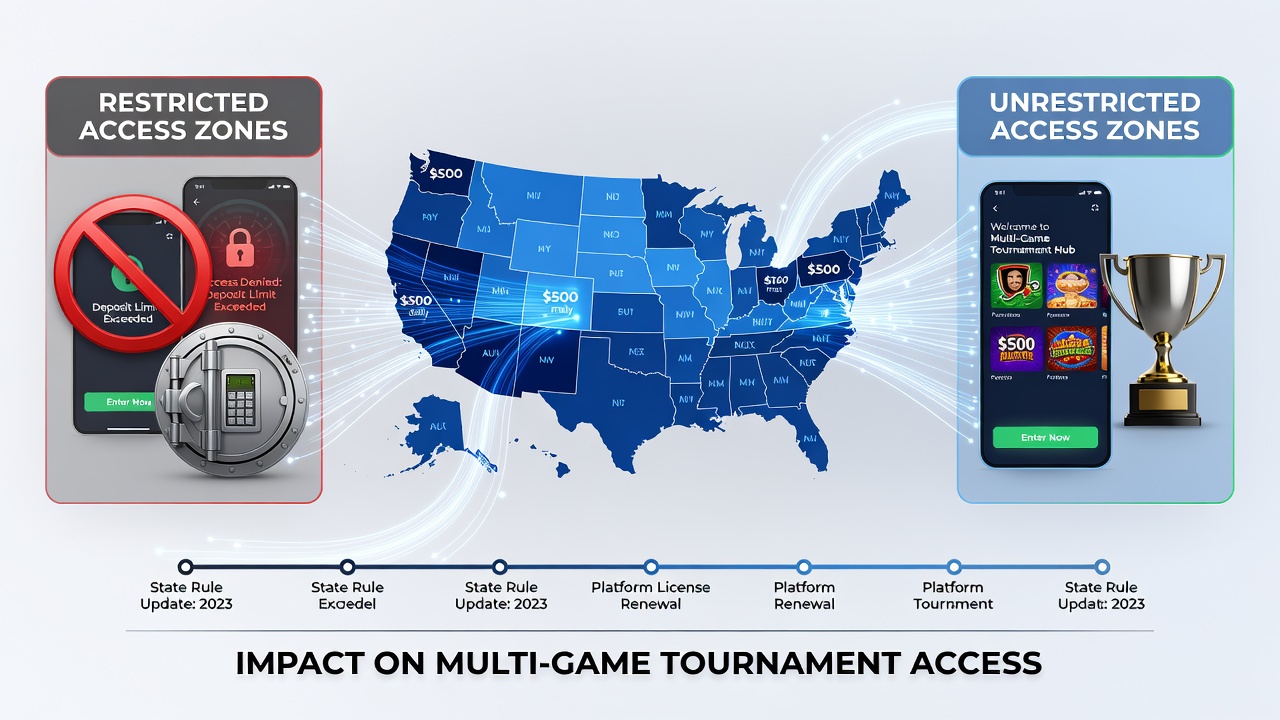
Payment processors aligned with each state's framework further shape access, since some states restrict certain digital wallet options or require additional bank verification steps that delay deposits and, by extension, tournament entry. Observers note that players in states with streamlined deposit rules reach multi-game events faster on average, while those in markets with layered checks experience delays that can span one or two days.
Participation Patterns Across States
Figures compiled by state gaming commissions reveal disparities in tournament engagement that correlate with deposit rule stringency. States permitting lower minimum deposits and faster verification show higher rates of repeat entries into multi-game formats, whereas jurisdictions with elevated thresholds record lower overall participation despite comparable player bases. These patterns emerge because deposit rules function as gatekeepers that determine how many users can meet the preliminary funding requirements before the tournament window opens.
Operators respond by offering state-tailored deposit bonuses that help users clear the entry bar, yet these promotions remain subject to the same regulatory caps and cannot override the underlying limits. The result is a landscape where access to the same tournament series varies noticeably depending on the player's home state.
Conclusion
State-specific deposit rules continue to define the boundaries of tournament participation on licensed mobile platforms by setting the practical conditions under which players can qualify. As regulatory environments evolve and platforms refine their compliance tools, the interplay between these rules and multi-game event structures remains a central factor in determining who gains access and how quickly. Data from multiple jurisdictions shows that these differences produce distinct participation profiles rather than uniform national patterns.